
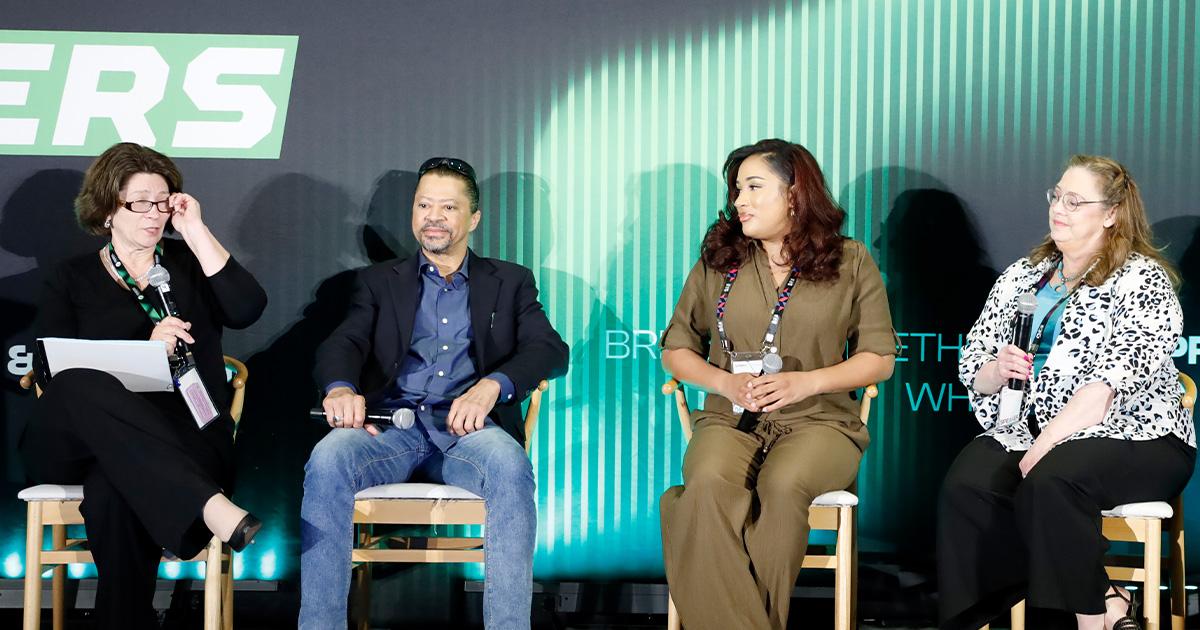
Have you ever wondered what separates a startup that gains momentum from one that struggles despite having a promising product? This question continues to spark discussions at the upcoming founders' event in Dubai, where entrepreneurs and business leaders come together to explore the decisions that shape long-term business success. Every year, thousands of founders launch products with confidence, convinced they have identified a gap in the market. They invest time, money, and energy into building solutions that seem promising on paper. Yet many struggle to gain traction once they reach customers.
The challenge often begins long before a product reaches the market. Many founders focus on building solutions before confirming whether the problem they are addressing is important enough to solve. As startups navigate increasingly competitive markets, conversations around customer discovery, market validation, and product-market fit continue to take center stage. Understanding why this happens requires a closer look at one of the most common mistakes founders make during the earliest stages of building a business.
Entrepreneurs are naturally drawn to new ideas. They identify inefficiencies, imagine possibilities, and develop products they believe can improve lives. However, a strong idea does not automatically translate into a successful business. Many founders begin with a solution and then search for a problem that fits, often spending months building without validating whether the problem is meaningful to customers. Within this broader context, attending business summits in Dubai, such as the Founders 2.0 Conference, plays an important role in helping entrepreneurs broaden their perspective and engage directly with real-world business challenges.
Customers rarely purchase products for creativity alone. They invest in solutions that save time, reduce costs, increase revenue, or reduce frustration. The stronger the pain point, the greater the opportunity. Research from CB Insights shows that around 43 percent of startup failures are linked to poor product-market fit, indicating insufficient market demand for the product being built. This reinforces how often solutions are created without validated demand.
Not all problems carry the same value. Some are mildly inconvenient, while others result in significant financial, operational, or personal impact. Successful founders prioritize problems that customers are actively motivated to solve. These problems share certain characteristics:
When customers have already invested time, money, and effort in addressing a problem, the likelihood of adopting a new solution increases significantly. This becomes especially relevant in startup and investment discussions that occur at global business summits and conferences, where early-stage ideas are evaluated based on the strength of real customer demand and the urgency of the problem being solved.

Understanding customer behavior is often more complex than it appears in the early stages of building a startup. Even experienced founders can misinterpret signals, rely on incomplete feedback, or make assumptions that feel accurate but lack real market validation. These early misjudgments can quietly shape a product's direction long before it reaches real users, which makes it essential to critically evaluate how customer insights are formed and interpreted. These challenges typically arise in a few recurring patterns that influence how founders interpret customer needs, outlined as follows:
Founders often develop a strong emotional commitment to their ideas. This shifts focus toward features, branding, and execution rather than customer problems. It can introduce bias where supporting information is prioritized over contradictory insights. The focus should remain on validating the problem rather than defending the solution.
Early validation is often influenced by feedback from friends, family, and professional networks. While encouraging, it does not reflect true market behavior. Expressions of interest should not be mistaken for purchase intent. Real validation comes from actions such as payments, pilots, or active usage.
Founders often assume a personally observed problem is widely shared in the market. However, scalability depends on the breadth and intensity of the problem within the target audience. Without sufficient urgency or prevalence, even strong solutions may fail to gain traction. Structured customer discovery is therefore essential.
Successful founders adopt a structured and disciplined approach in the early stages of building a venture. Rather than focusing immediately on execution, they prioritize understanding the problem space, validating assumptions, and assessing real market demand.
Research on early-stage software startups suggests that failures often occur when founders prioritize product development before adequately validating customer needs. This reinforces the value of a validation-first approach when evaluating new opportunities. These principles are reflected in a set of foundational practices mentioned below:
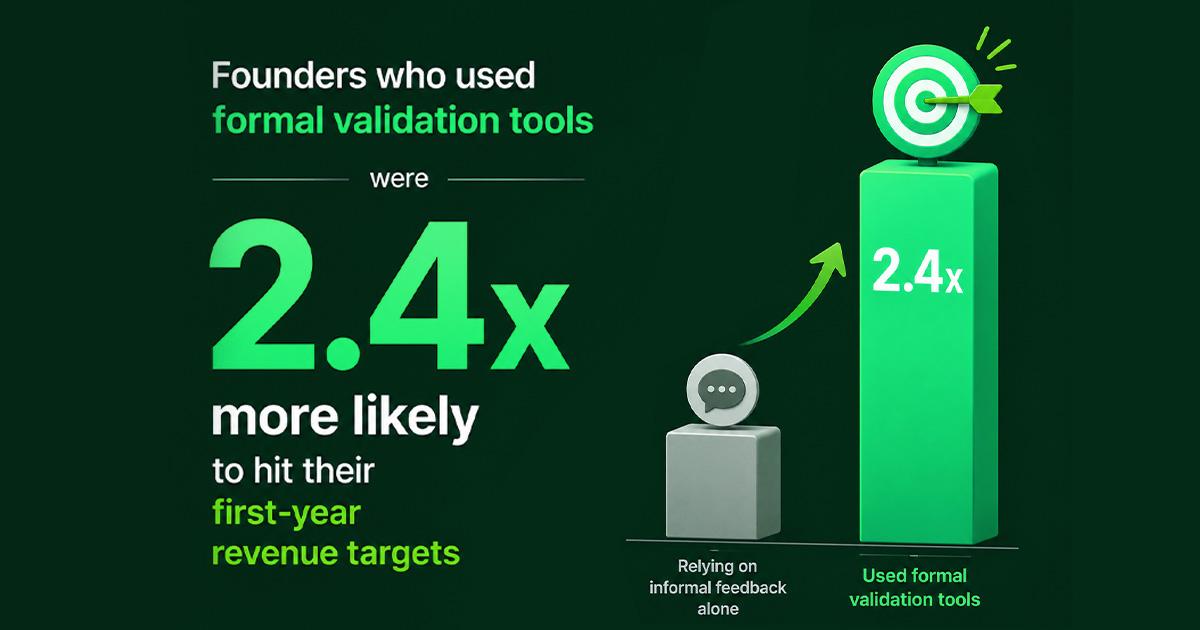
Strong startups are rarely the result of execution alone. They emerge from clarity in choosing what is worth building in the first place. For startup founders, this clarity reduces uncertainty and strengthens early decision-making, ultimately improving the likelihood of building something that can scale.
These principles remain central to discussions at leading business conferences across Dubai in 2026, including the Founders 2.0 Conference, where entrepreneurs and investors continue to explore what drives sustainable growth and effective decision-making in modern markets. Such conversations consistently reinforce the importance of approaching opportunities with a validation-first mindset rather than assumption-led execution.
1. Why do startups struggle with product-market fit?
A. Startups often struggle with product-market fit because they overestimate demand or fail to align their solutions with genuine customer needs and priorities.
2. How can entrepreneurs identify the right problem to solve?
A. Entrepreneurs can identify the right problem by engaging with customers, analyzing market challenges, studying existing solutions, and validating assumptions to assess real demand before building a product.
3. What can attendees expect at the upcoming business conference in Dubai?
A. Attendees can participate in discussions focused on entrepreneurship, business growth, leadership, innovation, startup strategies, and emerging opportunities across industries.
4. Why is identifying the right problem more important than building a strong product?
A. Even a well-built product can fail without a meaningful customer need, making problem identification essential for achieving product-market fit and adoption.
5. How can entrepreneurs participate in the Founders 2.0 Conference?
A. You can participate by registering through the conference website and exploring opportunities to attend sessions, network with industry professionals, and engage in discussions focused on entrepreneurship, innovation, and business growth.
Palak Gupta is a Content Writer at the Founders 2.0 Conference, where she develops insightful and engaging content centered on startup innovation, advancements in artificial intelligence, ethical business practices, and the evolving landscape of digital transformation. Through her work, she helps illuminate critical issues facing entrepreneurs today, including phishing scams, investment fraud, and identity theft. Outside of her professional pursuits, Palak enjoys exploring new cuisines, cooking, and gardening.
Posted on : Tue, 09/29/2026 - 14:32

Posted on : Tue, 09/29/2026 - 14:29
Posted on : Tue, 09/01/2026 - 16:05

Posted on : Thu, 08/20/2026 - 18:15

Posted on : Tue, 08/18/2026 - 13:58

Posted on : Wed, 08/12/2026 - 12:52
Posted on : Mon, 07/13/2026 - 15:13
Posted on : Thu, 04/16/2026 - 11:36
Posted on : Fri, 03/06/2026 - 14:01

Posted on : Wed, 02/25/2026 - 12:52