

Entrepreneurship is often described as a journey of learning through experience. While experience can be one of a founder's greatest teachers, it can also become one of the most expensive. A delayed hiring decision, entering the wrong market, misjudging customer demand, or scaling too quickly can have lasting consequences for a growing business. Many of these challenges are not caused by a lack of ambition or capability. Instead, they often stem from making important decisions without the benefit of diverse perspectives or shared experiences. This is one reason networking continues to play an important role in entrepreneurship.
Meaningful professional relationships provide founders with access to practical insights, honest feedback, and lessons learned by others who have faced similar challenges. As startups and growing businesses navigate increasingly competitive markets, learning through conversations can often help founders recognize opportunities and avoid costly mistakes before they occur. These evolving priorities continue to shape business events in Dubai, where founders, investors, business leaders, and innovators exchange ideas to support long-term business growth.
Business mistakes rarely happen because founders intentionally make poor decisions. More often, they occur because entrepreneurs are working with incomplete information. During the early stages of building a business, founders are expected to make dozens of important decisions about hiring, product development, fundraising, pricing, partnerships, and market expansion, often within limited timeframes and without established reference points. As businesses grow, the complexity of these decisions increases. Research analyzing more than 5,500 startups found that companies with the highest-quality business networks were 1.8 times more likely to achieve strong commercial traction within two years than those with weaker networks.
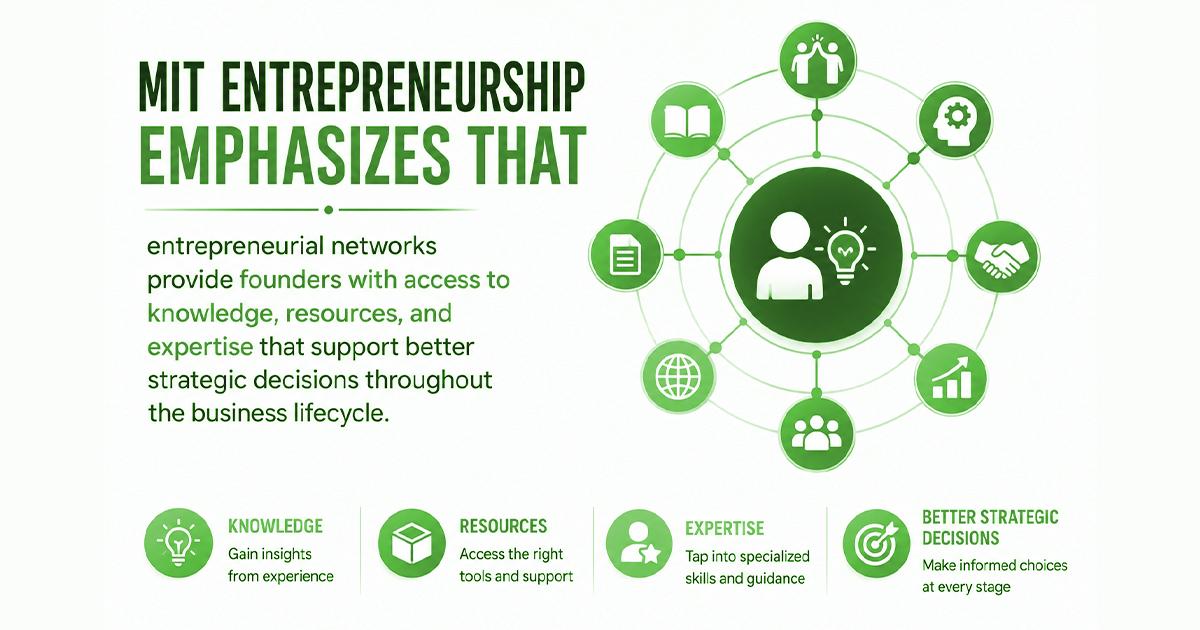
This suggests that the relevance and reach of a founder's network can significantly influence business growth and decision-making. As businesses grow, founders are no longer deciding only what to build but also when to expand, which opportunities to pursue, and which risks to take. Making these decisions in isolation can narrow perspective and increase the likelihood of overlooking potential challenges. Professional networks can help founders make more informed decisions by enabling them to:

Networking is often associated with introductions, partnerships, or fundraising opportunities. While these outcomes certainly matter, one of its greatest advantages lies in improving the quality of decision-making. Conversations with experienced entrepreneurs, investors, mentors, and industry experts at business events and conferences can provide practical perspectives that are difficult to gain through independent research alone.
Many founders attend global founders summits to expand their contact lists and to gain insights that influence their decisions long after the event concludes. Listed below are some aspects of networking that contribute to stronger business judgment:
The value of networking therefore extends well beyond exchanging business cards at global business events and summits. It creates opportunities for founders to strengthen their thinking before making important decisions.
Business growth often depends as much on avoiding unnecessary mistakes as it does on making the right decisions. While every entrepreneurial journey is different, founders frequently encounter similar challenges as their businesses evolve. Learning how others have approached these situations can help entrepreneurs recognize potential risks before they become expensive lessons.
Forbes recently published an article citing research from the Economist Intelligence Unit (EIU), which found that 78% of startups consider networking vital to entrepreneurial success. Professional networks often help founders avoid several common business challenges.
Growth is an important milestone, but expanding too quickly can place pressure on operations, finances, and customer experience. Conversations with experienced entrepreneurs often help founders recognize whether their business foundations are ready for the next stage of growth.
Building a team involves more than filling immediate vacancies. Networking with founders who have already experienced rapid hiring can provide valuable perspectives on recruitment, leadership development, and organizational culture.
Expanding into unfamiliar regions or industries often requires a deeper understanding of customer behavior, regulations, and competitive landscapes. Professional connections can offer practical insights that reduce uncertainty before making significant investments.
Many operational challenges are not unique. Founders who actively engage with experienced professionals are often able to identify proven approaches instead of spending valuable time and resources reinventing solutions.
Not every opportunity creates long-term value. Conversations within trusted networks can help founders evaluate potential partnerships more carefully by learning from the experiences of others.
Many founders begin expanding their professional networks when they are actively looking for investors, customers, or business opportunities. However, some of the strongest professional relationships are established long before immediate needs arise. Building trust gradually allows connections to develop naturally through shared experiences, meaningful conversations, and ongoing collaboration. This long-term approach to networking creates a foundation that founders can rely on during both periods of growth and moments of uncertainty.
Relationships built on mutual learning and genuine engagement are often more valuable than those formed only around immediate business objectives. For entrepreneurs seeking opportunities to exchange ideas with experienced founders, investors, and industry experts, the Dubai Edition of the Founders 2.0 Conference, taking place from March 29–31, 2027, will provide a collaborative environment where meaningful conversations can lead to lasting professional relationships and valuable business insights.
1. Why is networking important for founders?
2. What are the benefits of attending global business events?
3. Is networking only useful for early-stage startups?
4. How can founders build stronger professional relationships?
5. What topics are explored at the Founders 2.0 Conference?

Palak Gupta is a Content Writer at the Founders 2.0 Conference, where she develops insightful and engaging content centered on startup innovation, advancements in artificial intelligence, ethical business practices, and the evolving landscape of digital transformation. Through her work, she helps illuminate critical issues facing entrepreneurs today, including phishing scams, investment fraud, and identity theft. Outside of her professional pursuits, Palak enjoys exploring new cuisines, cooking, and gardening.
Posted on : Tue, 09/29/2026 - 14:32

Posted on : Tue, 09/01/2026 - 16:05

Posted on : Thu, 08/20/2026 - 18:15

Posted on : Tue, 08/18/2026 - 13:58

Posted on : Wed, 08/12/2026 - 12:52
Posted on : Mon, 07/13/2026 - 15:13
Posted on : Tue, 06/16/2026 - 14:01

Posted on : Thu, 04/16/2026 - 11:36
Posted on : Fri, 03/06/2026 - 14:01

Posted on : Wed, 02/25/2026 - 12:52